Trade data buyer’s guide
Customs & Import-Export Data Services: What Buyers Should Request
How to turn “I need customs data” into a useful dataset—by choosing the right source, HS code, country, time range, company fields, level of detail and validation rules before ordering.
The short answer
Start with the business decision, then choose the dataset
“Customs data” can mean national trade totals, monthly product flows, port-level movements, bills of lading, or company-level importer and exporter records. These sources have different coverage, licensing, fields and delays. A useful order begins with the decision you need to make—not a promise to deliver every field for every country.
“We need to identify active US importers of HS 8504.40 from Vietnam during January–June 2026, with company name, shipment date, quantity, weight, value and port where available.”
Source selection
Separate official aggregate trade data from shipment-level records
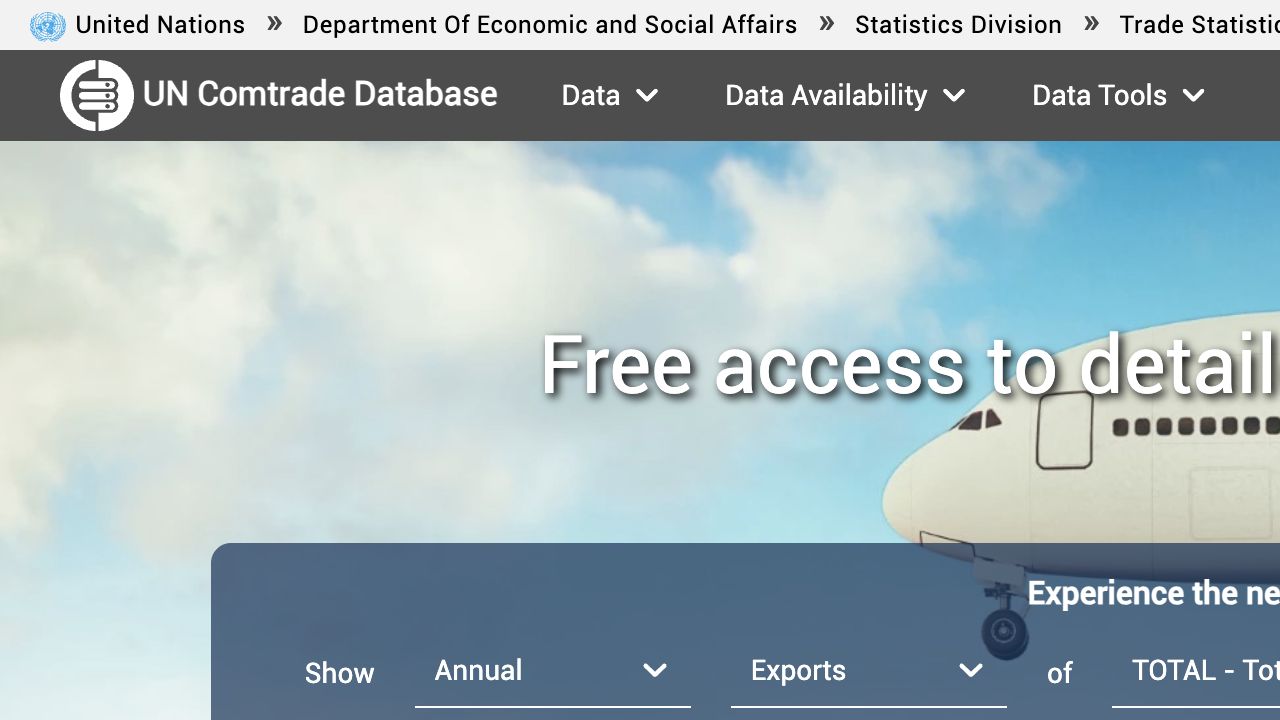
UN Comtrade aggregates official annual and monthly merchandise trade statistics by reporting country, partner and product. It is excellent for market sizing, trade trends, country comparisons and HS-code analysis. It generally answers “how much did a country trade?” rather than “which exact company bought this shipment?”
Company-level customs or bill-of-lading datasets can include importer, exporter, shipment, port, product description, weight, quantity or value fields, depending on the country and source. Coverage is not uniform: some markets publish detailed names, some mask parties, some expose only aggregate statistics, and fields can change over time.
| Need | Best starting point | Main limitation |
|---|---|---|
| Market size by HS code and country | Official aggregate trade statistics | No company-level buyer list |
| Importer or supplier prospecting | Shipment/company-level source where legally available | Country coverage and party names vary |
| Monthly trend and partner comparison | UN Comtrade or national statistics | Reporting lag and revisions |
| Specific shipment research | Manifest, customs or bill-of-lading source | May omit price, consignee or origin details |
Scope
Write a customs-data project brief that can be priced
- 1Decision: supplier discovery, buyer leads, competitor monitoring, market sizing, pricing research or compliance screening.
- 2Geography: reporting/import country, origin/export country, partner and whether “world” totals are acceptable.
- 3Product: HS edition and code level (2, 4, 6 digits or a national tariff line), plus inclusion and exclusion keywords.
- 4Time: exact start/end month or year and whether preliminary data is acceptable.
- 5Output: required fields, row limit, Excel/CSV/JSON format, language and update frequency.
Confirm the HS code before buying volume
A keyword can match unrelated product descriptions, while an incorrect HS code can exclude the target product completely. Validate several known shipments or national tariff examples before ordering a large extract.
Delivery design
Specify required fields and acceptable fallbacks
Ask the provider to mark fields as required, optional or unavailable before work begins. Do not accept a sample where blank values are silently replaced with guesses.
reporter_country, partner_country, trade_flow
period, hs_code, product_description
importer_name, exporter_name, notify_party
shipment_date, origin_country, destination_country
port_of_loading, port_of_discharge
quantity, quantity_unit, net_weight_kg
customs_value_usd, currency
source, source_record_id, retrieved_at
For aggregate data, company fields will normally be absent. For company-level records, customs value or quantity may be missing or inconsistent. A professional delivery keeps source identifiers, preserves original text, and separates raw fields from normalized fields.
Useful deliverables
Source-faithful fields for audit and future reprocessing.
Normalized country, company, port, date, quantity and value columns.
Source, filters, HS edition, retrieval date, exclusions and known gaps.
Counts, totals, leading partners and caveats linked to the clean data.
Validation
Check the sample before commissioning the full dataset
Trade-data acceptance checklist
Compare a sample aggregate total with the source portal and manually inspect a small set of company-level records. Differences do not always mean an error—trade statistics can use different valuation methods, reporting schedules, partner definitions and revision cycles—but the provider should explain them.
Custom research
Global customs and import-export data service
I deliver scoped trade-data projects by country, month, keyword or HS code, including company, value, quantity and port fields where the selected source makes them available. Projects can be one-off Excel/CSV reports or repeatable collection and cleaning workflows.
Customs data quote
Send the country, HS code, dates and required columns
I will check likely coverage, clarify the data level, and propose a small validation sample before a larger delivery.
Coverage and permissible use vary by jurisdiction and source license. Company-level fields cannot be guaranteed for every country or period.
Frequently asked questions
FAQ
What is the difference between customs data and UN Comtrade?
UN Comtrade primarily provides official aggregate trade statistics by country, partner, product and period. “Customs data” may also refer to company- or shipment-level records from national or commercial sources where available.
Can I get importer and exporter company names for every country?
No. Company-level coverage varies widely. Some jurisdictions publish names and shipment details, while others mask parties or provide only aggregate statistics.
What information is needed for a quote?
Provide the business goal, importing and exporting countries, HS code or product keywords, exact date range, required fields, approximate volume, output format and update frequency.
Can the service identify buyers for my product?
Where legally available shipment-level sources include consignee or importer names, the data can support prospect research. Results still need company validation and must be used in compliance with applicable law and outreach rules.
Last checked August 20, 2026. Platform interfaces, policies, coverage and pricing can change. Follow the linked official sources before submitting an application or purchasing data.